
Environmental Impact Overview
Dama Solar will make a major contribution to the energy transition in Romania, helping to limit the long-term impact of climate change and improving air quality for all Romanians.
Project Impact
Once operational, Dama Solar will be the largest solar plant in Europe, capable of covering the energy consumption of close to 1 million people. Located in Romania’s carbon-intensive grid, the project will also avoid 750,000 tonnes of CO₂ each year, one of the highest rates of avoided emissions per MWh in Europe. and . It will play a major role in Romania fulfilling its substantial solar potential.
The project will also create opportunities for workers to transition away from the coal industry, and will contribute to other political priorities as well, including long-term energy security and a reduction in energy bills.
There will be important benefits for local businesses too. In Arad, the project will create opportunities for local small and medium-sized companies. Nationally, the power produced by Dama Solar will be sold to companies through long-term power purchase agreements (PPAs). PPAs offer businesses many things: long-term certainty about the energy price they will pay, peace of mind over the security of supply, and an emission reduction guarantee – which, for companies in the supply chain of multinational firms with comprehensive net zero targets, could be vital to their long-term viability.
Benefits To Wildlife
Rezolv’s sustainability strategy has been built on industry best practice and adheres to international standards, including the Equator Principles and the International Finance Corporation (IFC)’s Environmental and Social Performance Standards. These standards are the most robust in the industry and, in many areas, go well beyond the requirements set down by Romanian law.
One of the pillars of our sustainability strategy is striving to ensure that each of our renewable energy plants supports flourishing ecosystems. Our ultimate goal is to ensure that Dama Solar demonstrates a net biodiversity gain by 2030. To achieve this, there will be a particular emphasis on integrating symbiotic agricultural activities on the site.
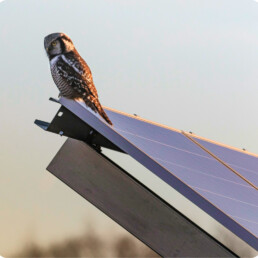
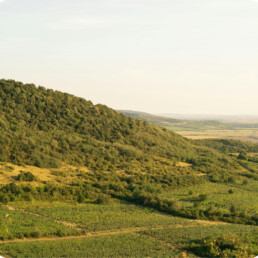
The land on which the project will be built has been over-cultivated in the past, so is now poor quality from a farming perspective and is of limited value ecologically. The project has been designed as a dual-use landscape. We intend to return much of the land to pasture, and the current plan is thatwith sheep will managinge the vegetation through grazing.
Separately, 82 hectares of the site will be dedicated to a nature reserve, restoring Romania’s ancient steppe grasslands and creating one of Southeastern Europe’s first and largest private-led nature restoration projects linked to a solar park. The nature reserve will be designed to meet the highest environmental standards. Its management will be guided by a Biodiversity Action Plan and expert ecological monitoring, ensuring long-term habitat health and species protection.
We are also committed to revegetation and full land restoration of the entire 1,000-hectare site post-decommissioning, returning the land better than we found it.
Benefits To Health
Air pollution is a major health issue in Romania. One particular area of concern is exposure to harmful concentrations of fine particulate matter (PM2.5), because exposure to PM2.5 at above recommended levels is a leading cause of premature death and disease (particularly stroke, cancer and respiratory disease).
In 2021, the World Health Organization recommended that, long-term, people should not be exposed to more than 5 micrograms of PM2.5 per cubic metre. The most recent air quality assessments from the European Environment Agency rated nine of the 19 Romanian cities it evaluated as “poor” in terms of air quality, meaning that PM2.5 levels were over 15 micrograms per cubic metre. This has a direct impact on human health.

The EEA concluded that, in 2020 alone, exposure to PM2.5 concentrations above WHO guideline levels in Romania could be linked to 21,600 premature deaths and 234,100 lost years of life – putting Romania fourth on the EU list when it comes to premature deaths attributable to exposure to PM2.5.
Electricity produced from solar panels does not pollute the air we breathe. Dama Solar will help lower PM2.5 concentrations in Romania and therefore reduce the health issues connected to air pollution.